 Garage Door and Parts Supplier California
Garage Door and Parts Supplier California
Garage Door and Parts Supplier California
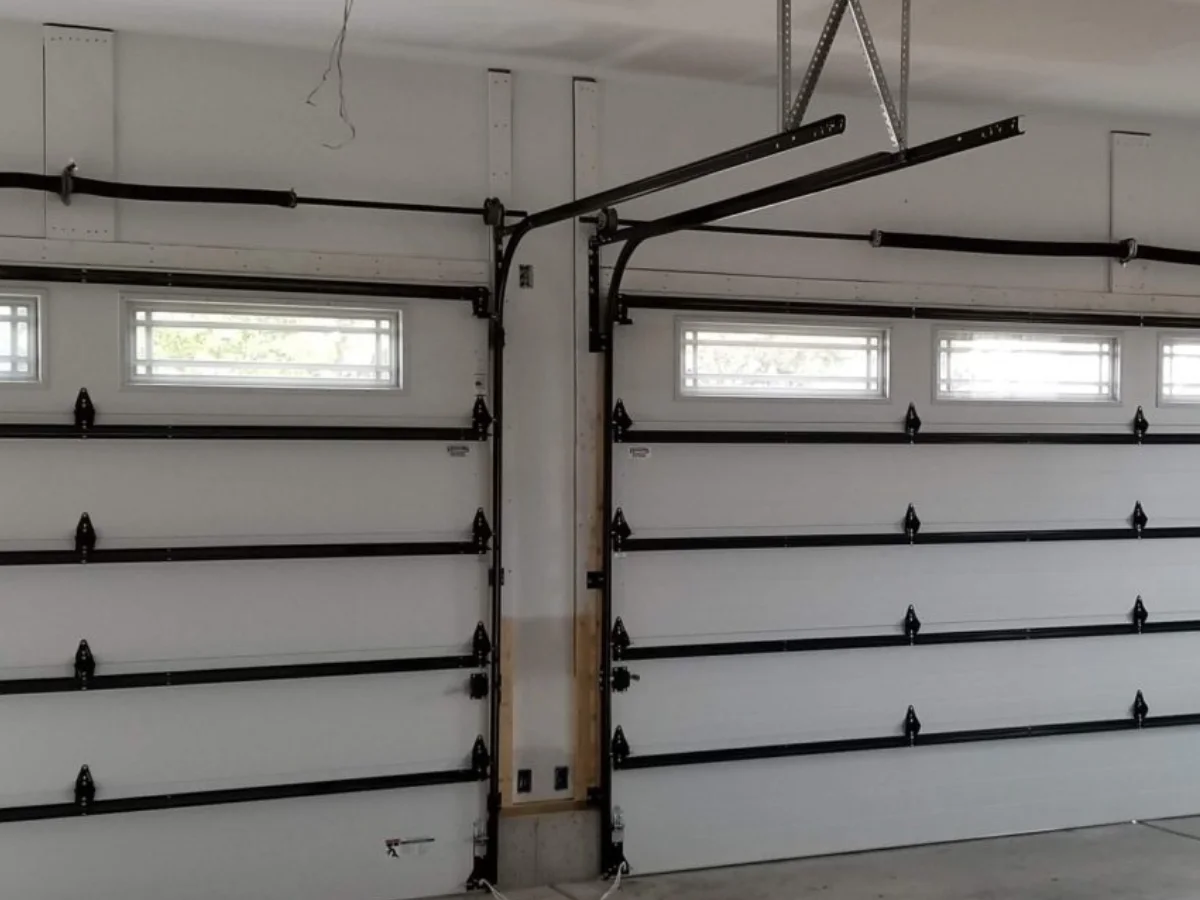
Every time a sectional garage door moves, it follows a path defined entirely by its track and rail system. The tracks hold the rollers, the rails carry the door through its arc from vertical to horizontal, and the entire assembly has to stay rigid and aligned through thousands of cycles over the life of the door.
For properties near Bourne Hall Park, along Kingston Road, or on residential streets close to Ewell West Station, this matters practically. A track system that is even slightly out of alignment causes the door to bind, wear unevenly, or put unnecessary load on the opener motor. Over time those small faults become bigger ones.
Understanding how these systems are structured and what keeps them working well is useful whether a door is being installed fresh or assessed after years of service. A good grounding in garage door support hardware structures makes it easier to recognise what correct installation looks like and what to watch for when things start to go wrong.
A standard sectional door track system has two distinct parts: the vertical tracks that run up either side of the door opening, and the horizontal tracks that extend back into the garage ceiling space. Together they form a continuous path that guides the door from fully closed to fully open.
The vertical tracks carry the door panels as they travel upward from the closed position. They must be plumb and parallel, and the gap between the track and the door edge must be consistent from top to bottom. Any twist or lean in the vertical section creates drag on the rollers and uneven panel wear.
The horizontal tracks take over once the door clears the opening. They hold the door flat against the ceiling in the open position. The curve where vertical meets horizontal, known as the flag bracket zone, is where the most mechanical stress occurs during each cycle. This transition point needs to be smooth and well-supported for the door to travel quietly and without resistance.
Track gauge refers to the internal width of the track channel. Residential sectional doors most commonly use two-inch standard gauge track, but heavier commercial doors and some older residential systems use three-inch commercial gauge. Fitting a roller into a track with the wrong gauge is one of the most common causes of noisy, rough door travel.
Rollers must sit in the track with minimal side play but without binding. Too much clearance and the door rattles. Too little and the roller drags on the track face and wears prematurely. Technicians fitting doors on properties near Ewell Court or along Chessington Road check roller to track fit as a first step before adjusting anything else.
The full category of Vertical and Horizontal Rails includes options sized for standard residential applications as well as heavier commercial setups, so matching the right gauge from the start is straightforward when the door weight and roller specification are known.
Getting the vertical tracks positioned correctly is the foundation of the entire install. Each track sits a specific distance from the door jamb, determined by the door thickness and the roller stem length. This measurement must be consistent from the floor bracket at the bottom to the flag bracket at the top.
The tracks are fixed to the wall or jamb using lag screws through slotted holes in the track mounting brackets. The slots allow small adjustments before final tightening. This matters on older properties near Ewell Village Conservation Area or along Church Street, where walls and frames may have settled and are not perfectly plumb.
A correctly positioned vertical track sits firmly against its mounting brackets with no flex or movement when pressure is applied. Any wobble at the track mount transfers directly into door travel and is felt as vibration or intermittent drag during opening and closing.
The horizontal track section is not truly horizontal. It pitches downward slightly toward the back of the garage, typically around a quarter inch per foot of run. This pitch ensures the door does not drift backward when open and stays seated in the track under its own weight.
Ceiling straps or angle iron supports hold the horizontal tracks at the correct height and pitch. These supports must be fixed into structural ceiling members, not just plasterboard or thin sheeting. Garages near Ewell Downs, along Ruxley Lane, or backing onto Hogsmill Open Space often have older timber ceiling structures that need the support anchor points checked carefully before load is applied.
The pitch of the horizontal track also affects how the spring tension is set. A track pitched more steeply than specified means the spring has to work harder to hold the door in the open position. Getting the pitch right during installation avoids spring adjustments later that are compensating for a layout problem rather than a spring problem.
The bottom bracket sits at the base of the door on each side and serves two functions. It carries the lowest roller that feeds into the vertical track, and it provides the anchor point for the lift cable that connects to the torsion spring system above the door.
This bracket takes significant load on every cycle. The lift cable tension pulls upward and inward during opening, and the full weight of the door sits through this bracket during closing. A bracket that is poorly fitted, undersized, or made from thin steel is a failure point waiting to develop. Many installers and homeowners choose to buy Garage Door Bottom Bracket components that are correctly specified to handle long-term operational load without deforming or cracking around the fixing points.
Properties near Stoneleigh, Auriol, and Cuddington include a mix of door ages and sizes. On older doors, the bottom bracket is often the first component that shows wear or cracking, particularly if the door has been operated with an incorrectly tensioned spring that puts excess load through the cable attachment point.
Track alignment is not a one-time job. Thermal expansion, building settlement, and the vibration of thousands of door cycles all work slowly to shift track positions over time. A door that ran smoothly at installation can develop a bind or a rattle over several years without any single identifiable event causing the change.
Routine inspection of the track fixing bolts, the roller condition, and the gap between roller and track face takes only a few minutes and catches small issues before they become larger ones. Technicians covering jobs near West Ewell, East Ewell, and along Epsom Road build this check into every service visit regardless of the reason for the call.
Understanding how track support alignment pressure is distributed across the bracket system helps explain why some alignment issues show up at the top of the vertical track while others appear at the transition curve or along the horizontal run.
Track specification should be matched to the door weight, door height, and headroom available above the opening. Standard lift, low headroom, and high lift configurations all use different track layouts, and fitting a standard lift track into a low headroom situation produces a door that cannot complete its travel arc without striking the ceiling or the opener mechanism.
For homes near Nonsuch Park, along Park Hill Road, or on streets close to Ewell High Street, where garage dimensions vary considerably between periods of construction, confirming the headroom measurement before specifying the track layout is essential. A two-inch shortfall in headroom means a different track configuration entirely.
A well-specified set of purchasing Garage Door Tracks matched to the correct door height and weight class gives the installer a system that fits the space cleanly and supports the door through its full range of travel without compromise.
A track and rail system that is correctly specified, properly installed, and kept in good condition does its job invisibly. The door moves smoothly, quietly, and consistently. The opener runs at the load it was designed for. The springs stay balanced because the door is not fighting a misaligned track on every cycle.
These outcomes are not the result of luck. They follow directly from getting the track gauge, positioning, pitch, and bracket hardware right at the outset. The details covered here apply whether the door is new or being assessed after years of service on a property near Bourne Hall, along the Hogsmill riverside, or anywhere else in the area.
Track systems are among the most durable components in a garage door assembly when they are set up correctly. Understanding what correct looks like, and what early warning signs to watch for, is what keeps a door running well for the long term.
Address: 4949 Florin Perkins Rd Ste 30A, Sacramento, CA 95826
Phone: (916) 414-9070
Legacy Garage Door Depot, with supplier stores in Santa Clara and Sacramento, delivers premium garage door parts at competitive prices. The firm provides a comprehensive range of components for homeowners, technicians, and garage door companies. Their inventory includes reliable torsion and extension springs, garage door openers, Liftmaster models, remotes, and keypads. They also stock rollers, cables, tracks, hinges, and seals, offering a full selection of genuine and aftermarket replacement parts with fast local and online availability.
The store operates 24/7 online and can be reached on their primary lines at, +1 408-850-2617 and +1 916-414-9070.